
Back to Courses
Business & Management
Basic Life Support (BLS) and CPR
Comprehensive training on recognizing and responding to life-threatening emergencies, including CPR techniques for adults, children, and infants, and choking relief. Meets UK Resuscitation Council guidelines.
Course Overview
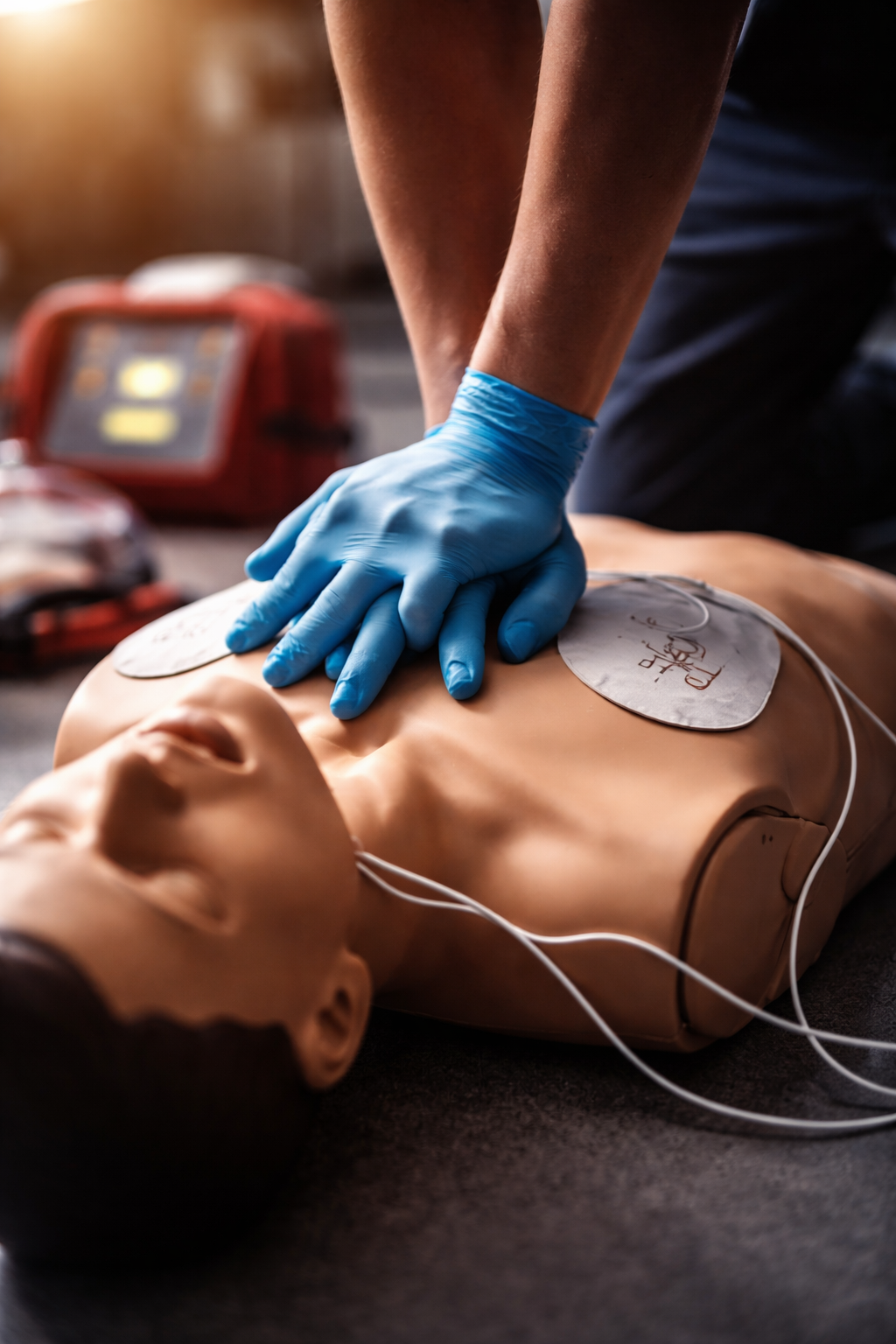
Basic Life Support (BLS) and CPR Course – Professional Certification The Basic Life Support (BLS) and CPR course is a critical training programme designed for healthcare professionals, caregivers, and members of the public who want to acquire life-saving skills. This comprehensive course provides participants with the knowledge and practical abilities required to respond effectively to cardiac emergencies, respiratory failure, and other life-threatening situations. BLS is the foundation of emergency medical care, focusing on maintaining blood flow to vital organs when the heart stops beating or when breathing ceases. Cardiopulmonary Resuscitation (CPR) combines chest compressions with rescue breaths to keep oxygenated blood circulating until advanced medical help arrives. These skills are essential for anyone working in healthcare settings, schools, fitness centres, hospitality, or any environment where emergencies may occur. This course covers the latest resuscitation guidelines from the Resuscitation Council UK, ensuring that all participants learn current, evidence-based techniques. You will master the chain of survival, understanding each critical step from early recognition of cardiac arrest to post-resuscitation care. The training includes detailed instruction on adult, child, and infant CPR, with specific adaptations for different age groups and scenarios. Participants will learn how to use an Automated External Defibrillator (AED) safely and effectively, a device that can significantly increase survival rates when used promptly. The course also addresses choking management for conscious and unconscious victims, recovery position techniques, and the importance of teamwork during resuscitation efforts. Why This Course Is Important Cardiac arrests can happen anywhere, at any time, to anyone regardless of age or health status. In the UK alone, there are over 30,000 out-of-hospital cardiac arrests each year, with survival rates remaining tragically low compared to other developed countries. Immediate CPR can double or even triple survival chances, making trained responders invaluable in emergency situations. For healthcare professionals, BLS certification is not just recommended but often mandatory. Nurses, doctors, dentists, paramedics, and allied health professionals must maintain current BLS skills as part of their professional registration and duty of care. Even for those not working directly in clinical roles, having BLS training demonstrates commitment to patient safety and emergency preparedness. This course equips you with the confidence to act quickly and effectively when every second counts. You will learn to remain calm under pressure, make critical decisions rapidly, and perform life-saving techniques with precision. These skills extend beyond the workplace, enabling you to help family members, friends, or strangers in community emergencies. What You Will Learn The course begins with the fundamental science of cardiopulmonary resuscitation, explaining why CPR works and how chest compressions maintain partial blood flow during cardiac arrest. You will understand the physiology of oxygen deprivation and its effects on the brain and other vital organs, emphasising why rapid intervention is crucial. The practical components cover the complete CPR sequence for adults, including the correct hand placement, compression depth (at least 5cm but not exceeding 6cm), compression rate (100-120 per minute), and the ratio of compressions to rescue breaths. For infants and children, you will learn modified techniques that account for their smaller size and anatomical differences. AED training forms a significant part of the course, as these devices are increasingly available in public spaces. You will learn step-by-step operation of the AED, including pad placement, voice prompts, and safety considerations. The course covers scenarios where defibrillation may or may not be appropriate, ensuring you understand when to use this life-saving technology. Choking management is addressed in detail, with separate procedures for conscious and unconscious victims. You will learn the abdominal thrusts (Heimlich maneuver), back blows, and chest thrusts technique appropriate for different age groups and situations. The recovery position is taught as a critical skill for managing unconscious breathing victims safely. Who This Course Is For This course is essential for all healthcare professionals including doctors, nurses, midwives, dentists, dental nurses, and allied health practitioners. It is also highly recommended for care home staff, nursery workers, school teachers, fitness instructors, hotel staff, security personnel, and any member of the public who wants to be prepared for emergencies. No previous first aid experience is required. The course is designed to take you from foundational knowledge to competent practical skills, with clear demonstrations and supervised practice sessions. Those with prior first aid training will find this course an valuable update on the latest guidelines and techniques. Become a Life-Saver Today BLS and CPR skills are among the most valuable qualifications anyone can possess. By completing this course, you join a network of trained individuals ready to respond when emergencies occur. Whether in a hospital corridor, shopping centre, or your own home, you will have the knowledge and confidence to make a difference between life and death. Enrol today and gain the peace of mind that comes with knowing you can help save a life.Course Modules
- 1 Introduction to BLS, Emergency Systems & the Chain of Survival
- 2 Scene Safety, DR ABC & Initial Patient Assessment
- 3 High-Quality Adult CPR: Chest Compressions & Rescue Breaths
- 4 AED Operation, Defibrillation Theory & Public Access Programmes
- 5 Foreign Body Airway Obstruction (FBAO): Recognition & Management Across Age Groups
- 6 Paediatric BLS: CPR and AED for Children (1–Puberty)
- 7 Infant BLS: CPR Technique, Anatomical Considerations & FBAO Management
- 8 Recovery Position, Post-Resuscitation Care & Return of Spontaneous Circulation (ROSC)
+ 2 more modules available